“High capacity” is one of the most overused phrases in ride procurement. A machine can carry a hundred passengers and still create queues if its cycle is long, its loading is slow or its weather envelope closes it for a third of the season. Selecting the best high-capacity ride for an outdoor attraction means comparing four numbers together, not one seat count.
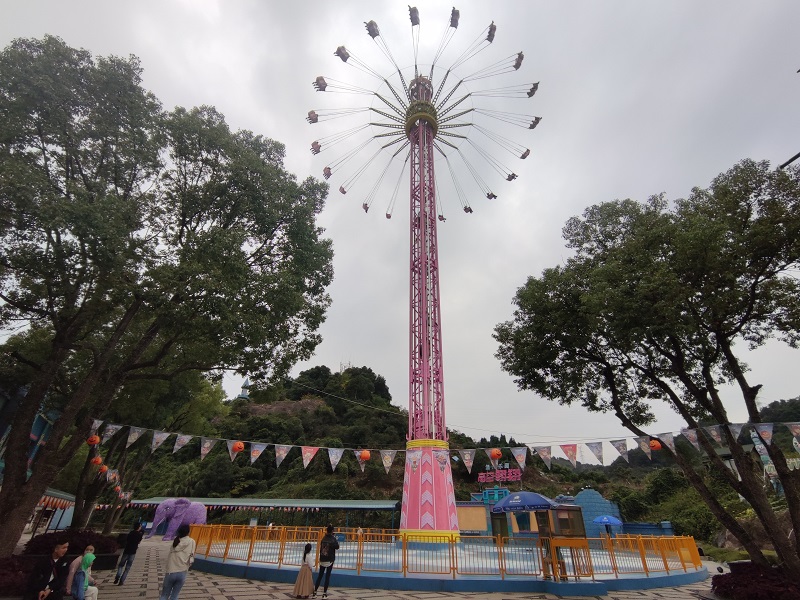
This article sets out a practical framework for developers choosing a high-capacity outdoor attraction, using a 42m sky flyer ride for sale as the worked example of a ride that combines high throughput with a landmark presence.
1. Start With Peak Demand, Not Seat Count
The capacity a park needs is determined by its busiest days, not its average ones. Start with peak attendance, the share of guests who will ride, and the number of hours the ride will operate on that day.
That gives the required hourly throughput. Only then does it make sense to look at seat counts and cycle times, because the same capacity can be reached by many seats with slow cycles or fewer seats with fast ones.
Developers should also separate the capacity needed for the opening year from the capacity needed at maturity. Overbuilding for a future peak that arrives in five years ties up capital that could be spent on other attractions.
2. The Capacity Formula: Seats × Cycles × Uptime
Theoretical throughput is seats per cycle multiplied by cycles per hour. Real throughput adds the availability factor: the proportion of operating hours the ride is actually running.
A 32-seat tower with a four-minute cycle is nominally 480 passengers per hour. At 90 per cent availability and realistic loading, the figure is perhaps 380 to 420. A machine with more seats but a longer cycle may not beat it.
3. Ride Types That Deliver High Capacity Outdoors
Several attraction types reach high outdoor throughput. Ferris wheels carry many passengers per rotation but have long cycles. Coasters move large numbers but require major infrastructure. Flat rides vary widely.
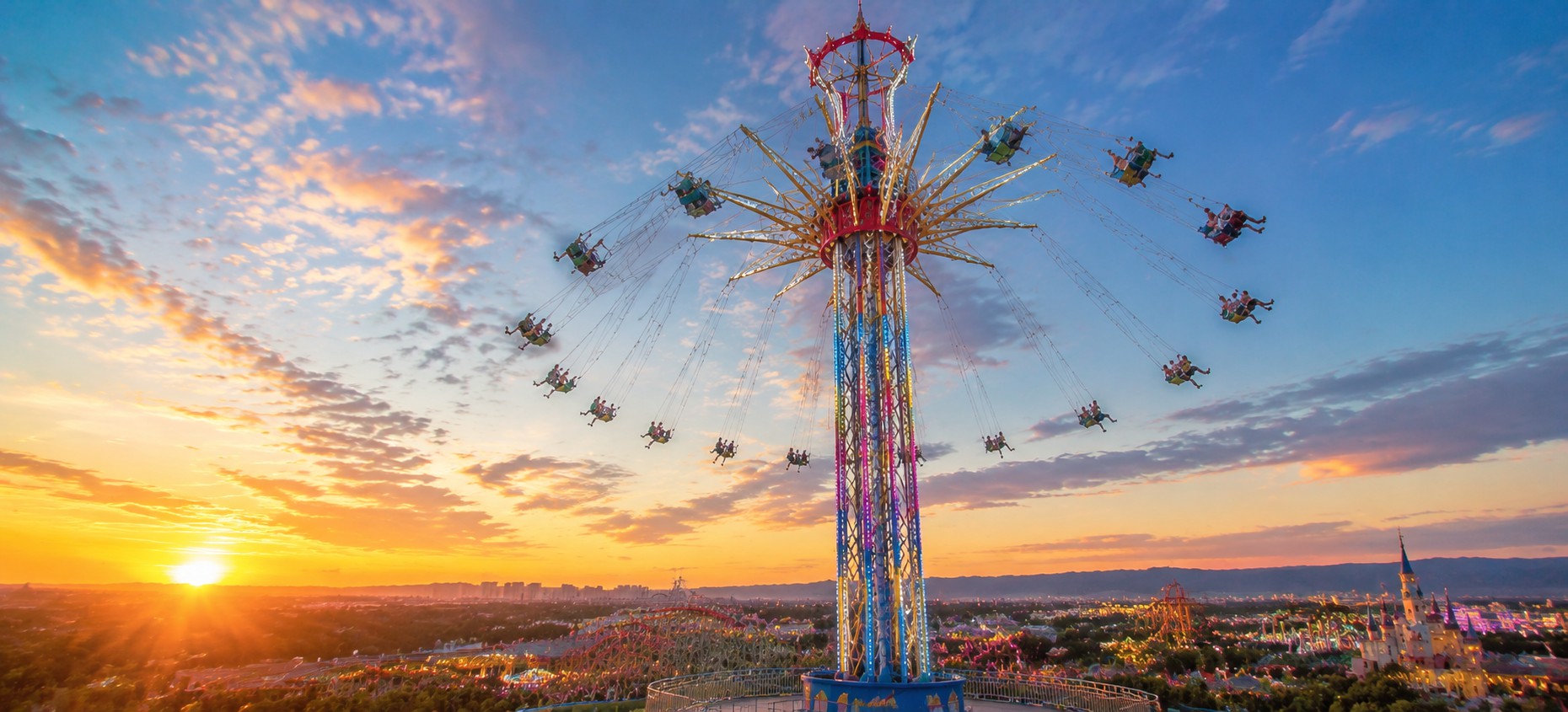
A tower swing seat ride is unusual because it combines a compact footprint, a strong visual identity and a short cycle. For parks that need both throughput and a landmark, it is often the most efficient option per square metre.
4. Throughput vs Queue Experience
Throughput is not the same as queue comfort. A ride that moves 400 people an hour but has a single narrow loading lane can still feel slow to guests.
Developers should look at the platform design, the number of loading positions, the restraint check procedure and the exit route. These operational details determine whether the theoretical capacity is actually delivered on a busy Saturday.
5. Operating Cost per Rider
High capacity is only valuable if it reduces the cost per rider. Compare the annual operating cost (staffing, power, maintenance, inspection, insurance) against the expected annual ridership.
A high-capacity ride with a large crew and heavy maintenance can cost more per rider than a smaller attraction. The 42 m configuration draws around 75 kW and needs a modest crew, which keeps the cost per rider competitive.
Model this over at least three seasons. First-year ridership is usually lower than steady state, and a ride that looks efficient on mature attendance may struggle during the ramp-up period.
6. Weather and Uptime
Outdoor capacity is reduced by every day the ride cannot operate. Wind, rain and lightning all matter, and exposed sites lose more days than sheltered ones.
Ask for the maximum operating wind speed and estimate the annual closure days for the specific location. A ride that loses 25 days a season has 7 per cent less capacity than one that loses none.
7. Site Constraints That Limit Capacity
Capacity is also limited by the site. A narrow plot may not accommodate a wide loading platform, and a tight access route may prevent the crane or the delivery vehicles from servicing a larger machine.
A high chair swing tower needs a 25 m footprint plus clearance, queue and service access. On a constrained site, that may be the largest ride the plot can carry.
Height restrictions and skyline considerations also affect capacity indirectly: a ride that has to be shortened to fit planning limits may carry fewer passengers or serve a narrower audience than the original specification.
8. A Comparison Framework
- Required peak-hour throughput
- Seats per cycle and achievable cycles per hour
- Availability factor for the site’s climate
- Footprint and clearance needed
- Installed cost and annual operating cost
- Cost per rider at realistic ridership
- Queue and loading design
Score each candidate on these seven lines rather than on the headline capacity. The result is usually a surprise: the ride with the most seats is rarely the one with the best cost per rider.
9. What to Ask Suppliers
Ask for the seat count, cycle time, loading procedure and realistic throughput, not just the theoretical maximum. Ask for the operating wind limit and the maintenance schedule, and ask for the foundation and power requirements so the site can be checked.
A swing seat tower by Dinis is supplied with this data, and the structure is protected with galvanized steel for outdoor service. Dinis has supplied tower rides, ferris wheels, swing chairs and complete park equipment packages from Zhengzhou, China for more than twenty years. As an amusement ride factory, the company provides the technical and operational documentation that lets a developer compare high-capacity options on real numbers.
Current project reference: https://www.dinisdreammyland.com/products/42-m-sky-flyer-ride-for-sale/