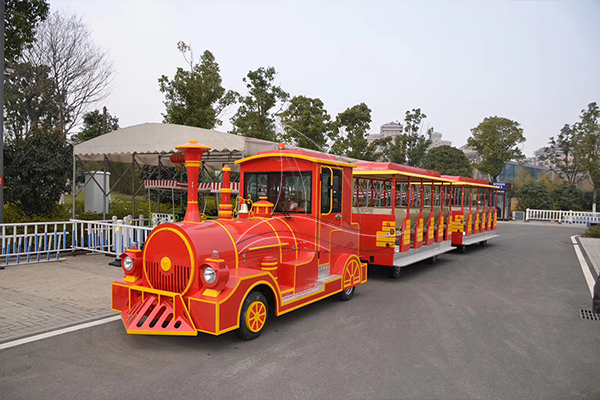
An electric trackless train can be a worthwhile investment when it solves a real visitor-mobility or entertainment need at an acceptable operating cost. The business case for an electric trackless tourist train investment should consider route conditions, capacity, ticketing, battery strategy and staff requirements. A train chosen only for appearance may underperform if its turning radius, gradient capability or daily range does not suit the venue.
What Problem Will the Train Solve?
The train may serve as a paid family attraction, a sightseeing service, a link between park zones or a transport option for guests who have difficulty walking long distances. The intended role determines the route, stops, dispatch frequency and pricing model. A transport-focused service may improve access and visitor distribution even if it does not sell a separate ticket, while an attraction-focused service needs a stronger theme and defined guest experience.
Operators should map boarding points, peak demand and the time required for loading. They should also decide whether the train will share paths with pedestrians, service vehicles or other attractions. Clear operating rules are essential because flexibility is useful only when the route remains manageable and predictable.
Which Capacity Fits the Venue?
The supplier presents electric configurations from approximately 16 seats to 70 seats and above. Smaller models may fit malls, zoos and compact parks, while 40-seat and larger trains may suit outdoor parks, resorts and scenic destinations with heavier traffic. Larger capacity can reduce dispatch frequency, but it also increases vehicle length and route requirements.
The broader trackless train capacity and power comparison lists indicative turning radii, gradients and vehicle formations for several capacities. Buyers should compare these parameters with the narrowest bend, steepest slope, surface condition and busiest stop on the planned route before selecting a model.
How Should Battery Performance Be Evaluated?
Battery endurance is influenced by passenger load, terrain, temperature, stop-start frequency, speed and battery condition. Therefore, a single range claim should not be used as the only planning assumption. The buyer should provide route length, maximum gradient, daily trips, charging window and local climate so the supplier can recommend an appropriate motor and battery configuration.
Lithium and lead-acid options may differ in purchase cost, weight, charging characteristics and replacement planning. The operating team needs a suitable charging area, electrical supply and documented procedures. The broader concept of a battery electric vehicle is useful for understanding why energy storage, charging and duty cycle must be considered together.
What Is the Complete Cost of Ownership?
The target page provides reference prices of approximately USD 8,000–13,000 for some 16–24-seat models, USD 13,000–15,000 for a 40-seat model and USD 25,000–40,000 for certain 56-seat, 70-seat and larger configurations. Actual quotations depend on capacity, body style, battery type and customization.
A battery sightseeing train procurement plan should add freight, taxes, unloading, commissioning, charging infrastructure, signs, boarding areas and any local approval costs. Ongoing expenses include electricity, drivers, tires, brakes, battery replacement, inspections, cleaning and spare parts. Comparing these costs over the expected operating period gives a more useful decision than comparing purchase prices alone.
How Can the Train Produce Financial Value?
A paid sightseeing route can generate direct ticket revenue. An included transport service may instead improve guest circulation, make distant zones more accessible and support spending across the venue. Private rentals, holiday themes and branded tours may provide additional revenue where demand exists.
Management should forecast weekday and weekend ridership separately. Ticket income should be tested against realistic occupancy, charging downtime and seasonal operations. If the train is primarily a service amenity, the operator should define non-ticket measures such as reduced walking complaints, improved access or better distribution of visitors.
When Is the Investment Suitable?
The investment is more convincing when the route is known, demand is measurable, charging can fit the operating schedule and the selected vehicle can maneuver safely. It is less convincing when the route has not been surveyed or the budget excludes battery replacement and maintenance.
A DINIS tourist train manufacturing specialist can help match capacity and power configuration to the intended application, while local operating and compliance requirements remain the buyer’s responsibility. Detailed options are available at https://www.dinistrains.com/electric-trackless-train/
Leave a Reply