A giant Ferris wheel is one of the few amusement rides where the ground itself limits the project. Operators who compare diameters and gondola counts before they investigate the soil often discover during commissioning that the base needs piles, a thicker raft or a redesigned access road, and every one of those changes costs time and money. This guide explains which foundation conditions for a giant ferris wheel a park should confirm before the order is placed.
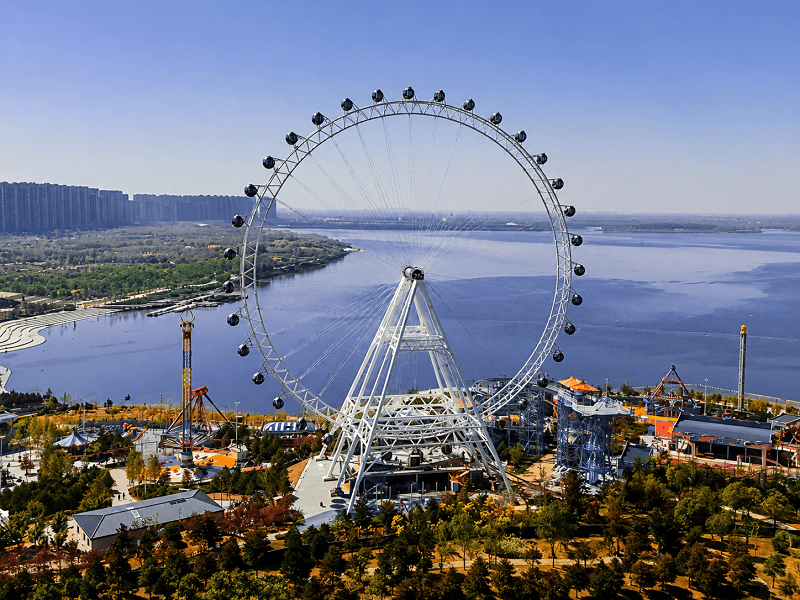
Why the Foundation Decides the Whole Project
A wheel carries its weight and the wind load through a small number of legs, so the pressure delivered to the ground is concentrated rather than spread. That concentration is what makes a Ferris wheel different from a flat ride: a modest change in diameter, gondola weight or hub height can turn an ordinary pad into a deep foundation package. Investors should treat the base study as part of the feasibility calculation, because it influences the land area, the construction schedule and the civil works budget long before steel is delivered.
Read the Ground Before the Drawing
Start with a soil investigation that reaches below the level of any future excavation, road widening or drainage trench around the ride. Boreholes positioned only under the centre column often miss the variable layers that carry the leg loads, so place several probes around the full footprint and record the water table at the same time. A park built on reclaimed land, river silt or previous construction fill needs a denser survey than one standing on rock, and the report should state clearly what the ground can and cannot support.
Confirm Bearing Capacity and Settlement Limits
Bearing capacity tells the engineer how much pressure the soil can accept; settlement tells the operator how much the structure will move afterwards. A wheel tolerates very little differential movement between its legs, because the ring and the drive system are built to tight tolerances. Ask the structural designer for the permitted settlement figure, then compare it with the calculated values for the actual soil layers, and keep the calculation on file for the local inspection authority.
Check Groundwater, Drainage and Weather Loads
Groundwater influences both the excavation method and the corrosion protection applied to the buried steel. Where the water table sits high, the base needs a dewatering plan during construction and a permanent drainage detail that keeps the anchor zone dry. Weather loads matter as much as the static weight: wind pressure on a large wheel produces a significant overturning force, so the foundation is designed with the local wind code in mind. Reference material on deep foundation design describes how piles, rafts and caissons transfer such loads into stronger layers.
Match the Base Design to the Wheel Model
Foundation drawings are produced for a specific model, not for a height category. The leg spacing, the number of support points and the load distribution of a 49 metre wheel differ from those of a larger structure, and the base detail changes with them. Buyers who review a range of models before the civil work begins can compare the base requirements of each option; studying the layout of an 89m giant ferris wheel ride alongside smaller models shows how quickly the footprint and the concrete volume grow.
Plan the Base Interface and Site Access
The finished foundation has to accept the anchor bolts, the cable ducts and the maintenance access at exactly the positions the manufacturer specifies. Tolerance here is unforgiving: bolts cast a few centimetres out of position cannot be moved later without cutting concrete. Confirm the interface drawing, agree who signs off the setting-out survey, and check that a crane and a concrete truck can still reach the site once landscaping and pathways are in place.
Foundation work rewrites the schedule if it is treated as a formality. Investigate the ground properly, confirm bearing capacity and settlement, plan for groundwater, drainage and wind, match the base to the chosen model, and fix the bolt interface before concrete is poured. A reliable ferris wheel base design protects both the structure and the investment. Buyers can review the structural options with ThemeParkProjects amusement equipment manufacturer and open the model page at https://themeparkprojects.com/giant-ferris-wheel-for-sale/.
Leave a Reply